When Roots Become More Than a Yard Problem
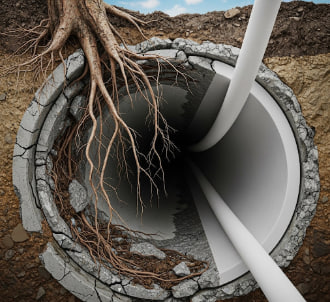
Trees look great. Their roots? Not always. Roots hunt moisture. A tiny crack, a loosened joint—enough for a hair-like root to slip through. Once inside, growth accelerates: fibers thicken, then braid into a mat that narrows the pipe. Water slows. Drains back up. Left alone, the line can collapse. That sequence is familiar to many property owners — and expensive to fix if tackled the old way: dig, remove, replace.
Trenchless sewer pipe lining offers another path. It’s less dramatic on the surface (literally — yards stay intact), but the fix is solid.
What Pipe Lining Actually Does
Pipe sewer lining builds a fresh, seamless flow path inside the damaged pipe. A flexible sleeve—treated with a resin—is navigated into the worn pipe. Once positioned, the liner is cured using heat, steam, or UV light until it hardens. The result: a smooth, jointless surface bonded to the original line. No cracks, no seams—nothing for roots to exploit. Flow improves, clog risks drop, and roots can’t break through.
That inner shell also smooths the flow. Waste moves faster, solids are less likely to snag, and the chance of future build-up drops. It’s repair and reinforcement in one step. Durable, yet unobtrusive.
Typical Steps on a Pipe Lining Job
First: inspect. A tiny camera snakes through the pipe to find roots, fractures, and offsets. Once mapped, cleaning follows. That means mechanical cutting or high-pressure hydro-jetting to clear roots and sediment. Only when the channel is clear does the liner go in. After positioning, curing locks the resin into a hard, resilient lining. Done properly, the line looks and behaves like a new pipe — from the inside out.
Clues That Roots Are the Culprit
- Not every slow drain is caused by roots, but several signs point strongly in that direction:
- Slow drainage in multiple fixtures, not just one sink.
- Gurgling from toilets or drains as air fights through partial blockages.
- Persistent sewage-like odors in the yard or near drains.
- Soft spots in the lawn, or small sinkholes — a sign of leaking or collapsed sections.
Spotting these early makes repair simpler and less costly. Waiting often means more excavation and higher bills.
Why Lining Beats Full Replacement (Usually)
Trenchless sewer line replacement is straightforward but brutal: excavation, removal, replacement, and then repair of whatever was dug up. Lawns, driveways, sidewalks—all of it. Lining sidesteps most of that. Work is done from small access points; disruption is minimal. For many homeowners and businesses, that’s the decisive benefit. Time savings, lower restoration costs, and less interruption to daily life or operations.
Still, lining is not magic. If a pipe is heavily collapsed, misaligned, or separated, full replacement may be unavoidable. A professional evaluation determines whether lining is appropriate.
Practical Considerations Before Choosing Lining
A few real-world factors should be weighed:
- Extent of damage. Severe structural failure limits lining effectiveness.
- Location. Lines beneath concrete, driveways, or mature landscaping gain the most from trenchless repair.
- Future root pressure. Lining blocks current entry points; it doesn’t make nearby roots disappear. Big trees may still exert pressure over time, so some ongoing management is prudent.
- Cost factors. Lining typically costs less than full replacement when excavation and surface restoration are considered, but the price varies with pipe length and condition.
Long-Term Value, Not Just a Quick Fix
Lining is more than a patch. It restores structural integrity, increases flow capacity, and reduces future maintenance needs. In practical terms: fewer emergency calls, less downtime for businesses, and a restored system that performs reliably for years. That return on investment shows up in both convenience and avoided costs.
Choose Skilled Professionals
Root cutting or chemical treatments can offer temporary relief, yes. But quick fixes don’t last. Unless the pipe is repaired, roots and clogs will keep coming back. Trenchless lining, done by experienced technicians with the right tools, creates a durable solution that stops the cycle for good.
Reliable Pipe Lining and Trenchless Solutions with ACR Plumbing
Tree roots and failing pipes don’t have to mean digging up your yard or paying huge repiping costs. With ACR Plumbing’s advanced trenchless plumbing services—like pipe lining, sewer pipe lining, and trenchless sewer line replacement—you get lasting repairs without the mess of traditional excavation. Whether you’re worried about the cost to replace plumbing in an old house or wondering how much it costs to repipe a house, our team delivers clear solutions, fair pricing, and guaranteed results. Call ACR Plumbing today for a free inspection and discover modern repipe plumbing solutions built to last.